Do you need a Farm and Ranch Policy?

What Is Farm and Ranch Owners Insurance?


Whether you are a Bucks or Montgomery Pennsylvania farmer who grows corn or soybeans, or a family with a small acreage hobby farm, the land is your livelihood. Farming and ranching is more than what you do, it is who you are. At Dtown Insurance, we can find you the right coverage that protects everything you work hard for each day.


Farm and ranch owners insurance is dual coverage that protects your farm operations and the home that you live in. With it, you will have a custom blend of homeowners coverage and business insurance with additional options to best fit the specific needs of your farm or ranch.


Family Farm and Ranch Insurance Coverage

In addition, to keep a successful business running, you need the right protection for your property, farm tractors, barns, and sheds on your property. That is why a Farm and Ranch policy will help safeguard your farm or ranch with customizable coverages that lets you build a single, reliable policy.


Parts of a Farm and Ranch Insurance Policy

Dwelling coverage

Offers protection for your farm home and all your stuff in your home against fire, lightning, windstorms, hail and most accidental losses, including vandalism and theft.


Farm personal property coverage

This provides protection for personal items in your farmhouse: clothes, furniture, and tvs.


Additional living expenses coverage

Pays for increases in living expenses if you have to move out of your home due to a covered loss. This coverage will pay for food and rent while your home is being repaired.


Additional Private Structures

Most Bucks and Montgomery County hobby farms have detached garages or other private structures that are designed solely for your personal use.


  • Includes private garages, utility buildings, boat slips and docks in same location as your house.
  • Other structures covered include gazebos, tennis courts, children's playhouses, structures for hot tubs, in-ground outdoor swimming pools and above-ground swimming pools and pool houses and outdoor kitchens.


In addition, if you are renting out a space to tenants to board a horse on your farm, and that space incurs a covered loss that causes the space to become unusable, you will have coverage that can help pay the rental value of that horse stall.


This added coverage can make a big difference to your bottom line.


Farm building coverage

This coverage helps protect your pole barns, machine sheds, detached garages or other outbuildings.

Farm liability coverage

Delivers protection for the unexpected — including accidents, bodily injury, medical expenses or farm property damage.


Optional Farm and Ranch Insurance Coverages

Optional coverages help you customize your policy to your specific farm and ranch needs. Consider it added protection for extra peace of mind.


Farm equipment breakdown coverages

This covers a direct physical loss to your tractors, and other equipment due to an accident.


Additional farm and ranch property coverages

Optional coverage that offers extra protection, including increased limits on borrowed tractors and machinery, additional livestock hazards and more.


Supplementary coverages

Extra protection built into your policy for fire department service charges, private power and light poles, debris removal, clean up and more.


If you have a small farm, or a hobby farm, in Bucks County Pa contact us at Dtown Insurance. We're here to help  you get the coverage you need for your farm or ranch.


The Motorcyclist’s Guide to Insurance

August 7, 2026
The Life Insurance Application Process When you begin the life insurance application, the insurance company will review medical, non-medical and financial risk factors about yourself and your lifestyle. You could be asked to take a blood test, have your Physician provide a statement, and review your past and current medical prescriptions. Some life insurance companies conduct phone interviews to gain more insight into your family health history and/or to ask you additional questions. How do insurers determine risk class category? There are several tools insurance carriers use to help determine an applicant’s risk class. Medical exam The underwriting process for most life insurance policies includes a medical exam, which might collect height, weight, blood pressure as well as blood and urine samples. This information will be used to assess your risk class. Life insurance application The application provides critical information about your history, lifestyle and situation that also contributes to determining your risk class. Family medical history A part from your medical exam, the insurance carrier will likely provide a questionnaire requesting information about your family medical history. This is important information determining your risk and policy rate. There is NO medical exam life insurance in the marketplace. However, these policies may be more expensive than policies that require medical exams and also limit coverage. What questions will insurance carriers ask for insurance risk ratings? The number and types of questions posed by carriers during the insurance underwriting process may seem extensive, but the information may be used to help determine your risk class. Once this information has been processed, the life insurance company underwriter will determine what risk category you fall in based on characteristics such as your age, occupation, family health history and overall health status. These findings will place you in a rating class that will determine your premiums. While the names for specific life insurance company rating categories may differ between companies, the classifications are: preferred select, preferred, non-tobacco, preferred tobacco and standard tobacco. What is the difference in the risk class categories? It is important to note that not all insurance companies follow the same rating criteria. Therefore, you could be rated as “preferred select" by one company and “preferred" by another, simply because of that company's individual underwriting guidelines. Know that if you are a smoker, or a habitual user of products containing nicotine, your health class and final rate quote will likely be affected when you apply. For some insurance carriers, smoking includes e-cigarettes in addition to regular cigarettes or use of chewing tobacco. Preferred select rating A preferred select rating is typically assigned if you are in excellent health, fall into a normal height-to-weight ratio and have a favorable family health history. You might, for example, have no immediate family members who have died from cancer or heart disease at an early age. There may also be other non-medical criteria involved, but these are typically the basics for qualifying for a select rating. Some life insurance carriers may have higher ratings, such as super select. Preferred rating A preferred rating is also associated with optimum health. However, this rating implies there could be certain factors that may indicate you pose a slightly higher risk than someone who would qualify for a preferred select rating. This can be attributed to a number of different factors and depends on how the insurance company differentiates between a select and preferred rating, depending on the insurer. Non-tobacco rating A non-tobacco rating is typically associated with the average applicant, which includes nonsmokers and can include those who smoke occasionally or participate in minimal tobacco use. For example, if you smoke the occasional cigar, you might receive a non-tobacco rating, depending on the insurer. Preferred tobacco rating A preferred tobacco rating usually means that you would have an optimal rating if you didn't use tobacco products. Even if you don't have a family history of heart disease or lung cancer, for example, you will still receive the tobacco designation because you are a smoker. Standard tobacco rating A standard tobacco rating typically signifies that you are a tobacco user who does not meet the preferred rating guidelines, but are in otherwise relatively good health. You might have a big risk factor like high blood pressure but still have a favorable family medical history. There are many factors that determine your life insurance premiums. They include the types of insurance, the amount, length of coverage, as well as your risk rating. As shown above, if you use tobacco products, your premium rates will consider all the risks associated with being a smoker. The most important thing to remember is to be sure to inquire with the insurance carrier about the different risk classes. What is your current age? Are you a smoker? What was your parents' or grandparents' cause of death? Do you participate in any sports, hobbies or high-risk activities? What is your driving record like? Do you currently or have you previously taken any medicines? Please contact us at Dtown Insurance if you would like to discuss life insurance options -  215-345-1796 
June 4, 2026
Pennsylvania's Distracted Driving Law Effective June 5, 2026, the penalty is a summary offense with a $50 fine, plus court costs and other fees. Pennsylvania’s hands-free law may be referred to as Paul Miller’s Law. Paul Miller was killed in 2010 when a distracted driver crossed a center grass divider and traveled head-on into Paul’s car. If a driver is convicted of homicide by vehicle and driving while distracted, they may be sentenced up to an additional five years in prison. As a primary offense, drivers can be stopped by police if they have a mobile device in their hand while driving. The law: Defines an interactive mobile device as a handheld wireless telephone, personal digital assistant, smart phone, portable or mobile computer, or similar device which can be used for voice communication, texting, emailing, browsing the Internet, instant messaging, playing games, taking or transmitting images, recording or broadcasting videos, creating or sharing social media or otherwise sending or receiving electronic data. Defines driving as operating a motor vehicle on a highway, including anytime the motor vehicle is temporarily stationary because of traffic, a traffic control device (e.g., a traffic light or stop sign), or other momentary delay. Defines the use of an interactive mobile device as using at least one hand to hold, or supporting with another part of the body, an interactive mobile device, dialing or answering an interactive mobile device by pressing more than a single button, or reaching for an interactive mobile device that requires a driver to maneuver so that the driver is no longer in a seated driving position, restrained by a seat belt. A driver may use an interactive mobile device if the driver moves the vehicle to the side of or off a highway and halts in a location where the vehicle can safely remain stationary. The hands-free law allows for an emergency use exception if it is necessary to communicate with a law enforcement official or other emergency service to prevent injury to persons or property. Pennsylvania's Texting-While-Driving Ban The law prohibits as a primary offense any driver from using an interactive mobile device to send, read or write a text-based communication while his or her vehicle is in motion.  Defines an interactive mobile device as a handheld wireless telephone, personal digital assistant, smart phone, portable or mobile computer or similar device which can be used for voice communication, texting, emailing, browsing the Internet, instant messaging, playing games, taking or transmitting images, recording or broadcasting videos, creating or sharing social media or otherwise sending or receiving electronic data. Defines a text-based communication as a text message, instant message, email or other written communication composed or received on an interactive mobile device. Makes clear that this law supersedes and preempts any local ordinances restricting the use of interactive wireless devices by drivers. " Faces of Distracted Driving " is an online photo series exploring the tragic consequences of texting and cell phone use behind the wheel by sharing the stories of people from across the country who have been injured or lost loved ones in distracted driving crashes. Click here to view "Faces of Distracted Driving." Dtown Insurance agents have many years of experience in auto insurance. Our agents prioritize getting you the right coverage for the best price available. One of the best auto insurance carriers we work is AAA, one of the country’s largest and most reputable insurance carrier in the United States. Call today .
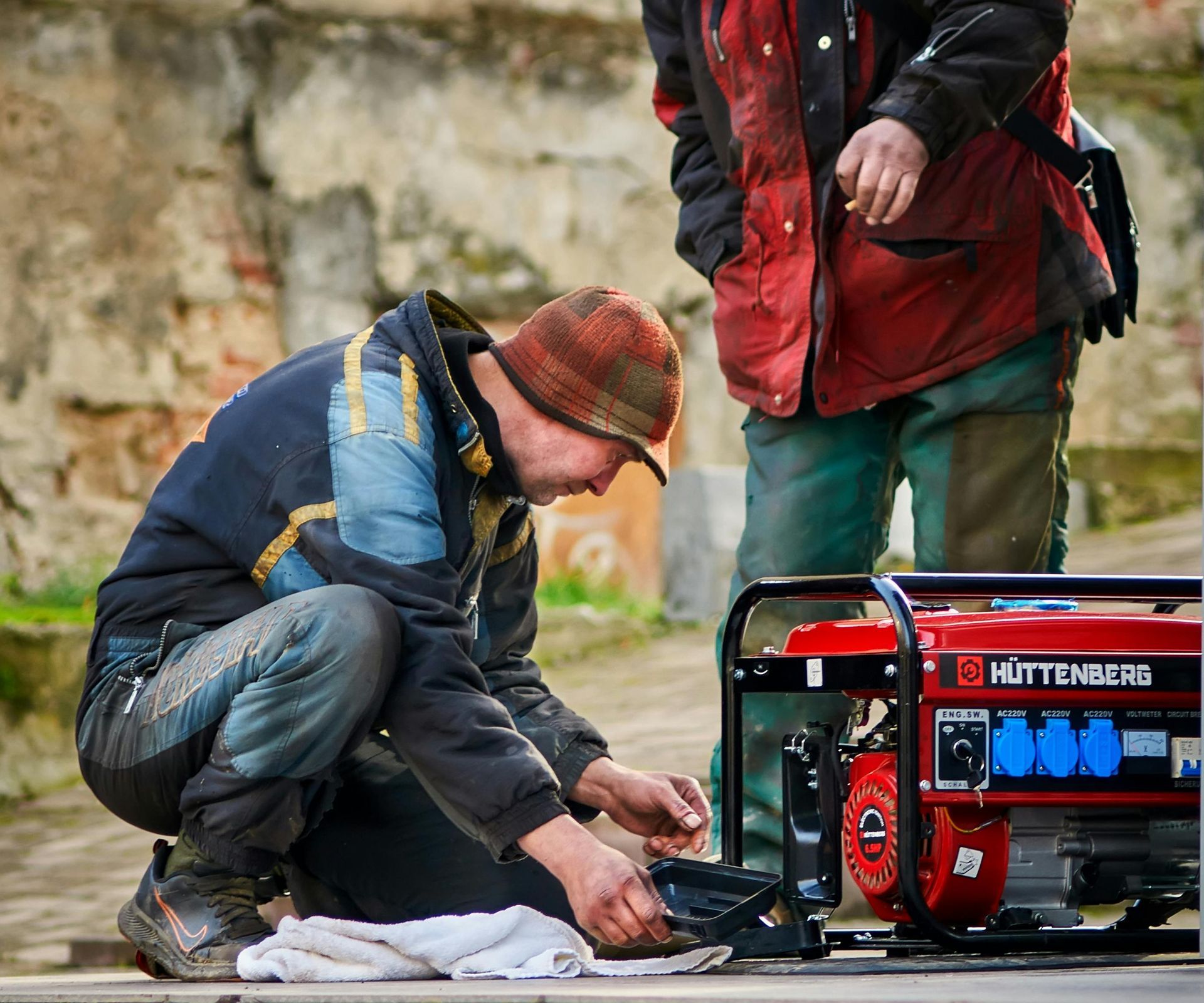
Two people working on home generator.
May 6, 2026
Does a generator lower home insurance or help prevent claims? See how home generators protect against outage-related damage and when they make sense.
Show More